
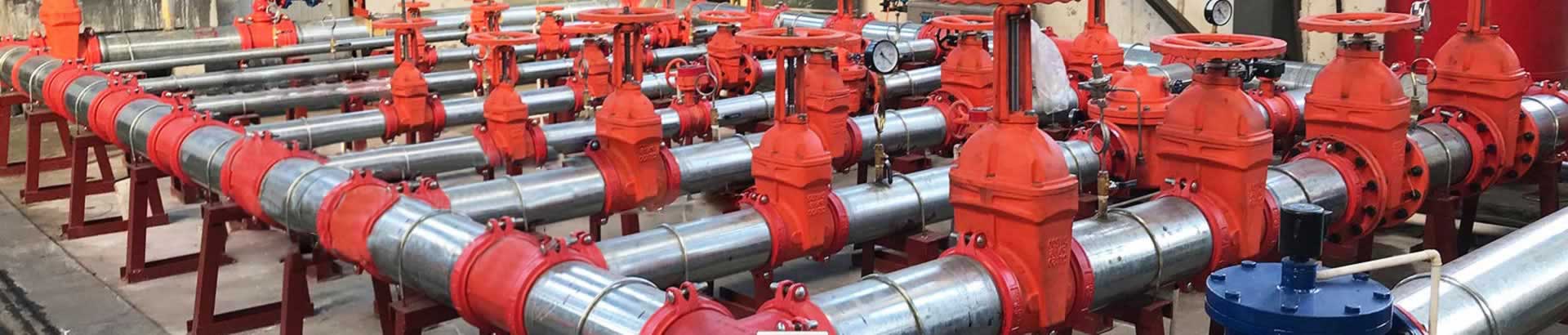

Critical Challenges in Oil Pipeline Flow Control and Sourcing Risks
Unscheduled shutdowns in midstream and upstream oil transmission networks carry catastrophic financial and environmental consequences, often costing operators exorbitant hourly losses in lost throughput and remediation expenses. High pressure crude oil pipelines frequently carry abrasive sand particulates, corrosive hydrogen sulfide, and volatile hydrocarbons under fluctuating thermal cycles. When procuring flow control equipment globally, engineering procurement and construction contractors frequently encounter severe operational bottlenecks caused by subpar casting integrity, inaccurate machining tolerances, and premature seat degradation. Partnering with an unverified china valve manufacturer can expose pipeline infrastructure to micro porosity leaks inside valve bodies, stem blowouts under pressure surges, or galling on sealing surfaces during emergency shutdowns. Field inspections across global refinery and pipeline installations reveal that a significant portion of early valve failures originate from improper raw foundry material heat treatment and skipped nondestructive examination stages rather than faulty mechanical design. Selecting a qualified china valve manufacturer demands looking far beyond unit price sheets to evaluate metallurgical traceability, foundry control, and pressure testing rigor. By addressing casting defects and elastomeric seal swelling before shipment, pipeline engineers eliminate fugitive emissions and safeguard continuous flow reliability across thousands of miles of transmission lines.
Mandatory Industry Standards and Global Trends for Pipeline Valves
Modern hydrocarbon transportation requires strict adherence to internationally recognized engineering codes that govern wall thickness, end to end dimensions, and fugitive emission thresholds. Any competent china valve manufacturer supplying the oil and gas sector must engineer products around API 6D for pipeline and piping valves and API 600 for heavy duty cast steel gate valves. As environmental regulations tighten across North America, Europe, and the Middle East, pipeline operators increasingly mandate ISO 15848 low emission certification to limit volatile organic compound leakage around valve stems to below fifty parts per million. Furthermore, oilfields producing sour crude with elevated hydrogen sulfide concentrations require strict compliance with NACE MR0175 and ISO 15156 metallurgical standards to prevent sulfide stress cracking under tensile load. For fire safety in pump stations and terminal manifolds, API 607 and API 6FA fire safe certifications verify that secondary metal to metal seats maintain shutoff integrity even after intense thermal exposure destroys soft polytetrafluoroethylene or reinforced elastomer inserts. Alongside regulatory compliance, the global pipeline industry is rapidly shifting toward large diameter, high pressure configurations integrated with automated pneumatic and electric actuators for remote SCADA monitoring. A forward looking china valve manufacturer continuously upgrades machining centers and testing bunkers to accommodate these harsh operational parameters.
Technical Comparison of Core Valve Types and Metallurgy for Oil Pipelines
Matching valve geometry, body metallurgy, and sealing materials to specific pipeline zones prevents cavitation, erosion, and excessive torque buildup during operation. While cast steel gate valves remain the standard for main line isolation where infrequent cycling and minimal pressure drop are prioritized, trunnion mounted ball valves dominate piggable transmission lines requiring rapid quarter turn emergency shutoff and bidirectional sealing. Meanwhile, triple offset butterfly valves offer a compact, weight saving metal seated alternative for crude oil storage terminals and custody transfer manifolds. Evaluating how a china valve manufacturer configures internal trim materials such as 13Cr stainless steel, Stellite 6 hardfacing, or electroless nickel plating is critical for surviving abrasive crude streams. The comparison table below outlines the operational boundaries, casting and forging standards, and seal materials of primary pipeline valves produced by Leflow.
| Valve Type | Design Standards | Body Materials (Casting / Forging) | Trim and Seal Configurations |
|---|---|---|---|
| Cast Steel Gate Valve | API 600, ASME B16.34, API 6D | ASTM A216 WCB, A352 LCB, LCC / ASTM A105, A350 LF2 | 13Cr Stem, Stellite 6 Hardfacing Seat, Flexible Graphite Packing |
| Trunnion Ball Valve | API 6D, ASME B16.34, API 608 | ASTM A216 WCB, A351 CF8, CF8M / ASTM A105, A182 F304, F316 | PTFE, Devlon, Peek, Viton GLT / Metal-to-Metal Tungsten Carbide |
| Triple Offset Butterfly Valve | API 609, ASME B16.34 | ASTM A216 WCB, A351 CF8M / ASTM A182 F316, Duplex F51 | Laminated SS316 with Graphite Seat, Stellite 6 Body Seat |
| Swing Check Valve | API 594, API 6D, ASME B16.34 | ASTM A216 WCB, A352 LCB / ASTM A105, A350 LF2 | 13Cr Overlay, Stellite 6 Hardfacing, Integral Metal Seat |
Beyond structural geometry, metallurgical selection dictates service life across varying geographical climates. Standard ASTM A216 WCB cast carbon steel performs reliably in ambient temperature sweet crude lines. However, pipelines traversing subzero regions require ASTM A352 LCB or LCC low temperature carbon steel with verified Charpy V notch impact toughness, while critical high stress connections utilize ASTM A350 LF2 forgings. For offshore platforms or high chloride water injection lines, upgrading to ASTM A351 CF8M stainless steel or duplex alloys prevents pitting corrosion. A seasoned china valve manufacturer provides complete material test reports conforming to EN 10204 3.1 or 3.2, verifying that every raw casting heat batch meets exact chemical and mechanical thresholds before CNC machining begins.
Auditing Quality Control Protocols and Testing Capabilities on the Factory Floor
Paper certificates alone never guarantee zero defect performance in high consequence oil pipelines; physical verification of inhouse testing infrastructure separates premier engineering factories from simple assembly workshops. When auditing a china valve manufacturer, procurement engineers must inspect how raw castings transition through incoming quality control. Every heat batch requires optical emission spectroscopy to verify carbon equivalent levels for weldability, alongside tensile strength, yield strength, and Brinell hardness testing. Because internal shrinkage cavities inside valve body necks or flange junctions can rupture under pipeline hydrotesting, reliable suppliers execute rigorous nondestructive testing protocols. Radiographic testing and ultrasonic testing identify subsurface voids in critical pressure containing walls, while magnetic particle examination and liquid penetrant testing detect surface microcracks on machined stems, wedges, and ball trunnions. Once assembly concludes, every single pipeline valve must undergo hydrostatic and pneumatic pressure validation strictly following API 598 or API 6D criteria. Shell hydrostatic tests apply 1.5 times the maximum allowable working pressure using corrosion inhibited water, while high pressure seat closure tests apply 1.1 times rated pressure alongside a low pressure air seat test at 80 psi to expose any microleakage across sealing rings. Verify that the chosen china valve manufacturer maintains calibrated digital pressure chart recorders and retains serialized test videos for full quality traceability.
Field Application Insights and Engineering Value from Leflow
Real world pipeline projects illustrate why collaborative engineering and strict quality control directly impact total cost of ownership. In a recent crude oil gathering and terminal expansion project operating at high working pressures with elevated sand content, standard floating ball valves suffered rapid seat erosion within months. By transitioning to API 6D trunnion mounted ball valves and API 600 cast steel gate valves featuring tungsten carbide coated trims and Stellite hardfaced seats, the pipeline operator extended maintenance intervals significantly while achieving zero fugitive leakage. Executing such tailored fluid control solutions requires a china valve manufacturer with deep application engineering expertise and comprehensive production control. Located in Shijiazhuang, Leflow brings over twenty years of specialized manufacturing and OEM development experience across the petroleum, chemical, liquefied natural gas, and power generation industries. Operating under a strict quality management framework, Leflow maintains complete inhouse inspection and testing facilities capable of chemical element analysis, mechanical property testing, and nondestructive testing on every batch. From heavy duty cast steel gate valves, globe valves, and check valves to fully welded ball valves, triple offset butterfly valves, and API cast steel strainers, the engineering team customizes existing models or designs specialized valve functions to match demanding field conditions. Partnering with an established china valve manufacturer like Leflow gives EPC contractors and pipeline operators transparent material traceability, certified pressure performance, and dependable delivery schedules for critical energy infrastructure.
Frequently Asked Questions
What certifications should an oil pipeline valve supplier hold?
A qualified supplier must comply with API 6D, API 600, and ASME B16.34 design standards, alongside API 598 pressure testing protocols. For hazardous environments, verify ISO 9001 quality management, CE PED compliance, API 607 fire safe certification, and NACE MR0175 metallurgical compliance for sour gas service.
How are cast steel valves tested before leaving the factory?
Every valve undergoes optical spectroscopy for chemical composition, mechanical tensile testing, and nondestructive examination including ultrasonic or radiographic inspection. Final validation includes a hydrostatic shell test at 1.5 times rated pressure, a high pressure hydrostatic seat test at 1.1 times pressure, and a low pressure pneumatic seat test.
How to choose between a gate valve and a ball valve for oil pipelines?
Select cast steel gate valves for mainline isolation where full port flow, low pressure drop, and infrequent operation are required. Choose trunnion mounted ball valves when the pipeline requires rapid quarter turn emergency shutoff, frequent cycling, pigging compatibility, and tight bidirectional sealing under high differential pressures.