
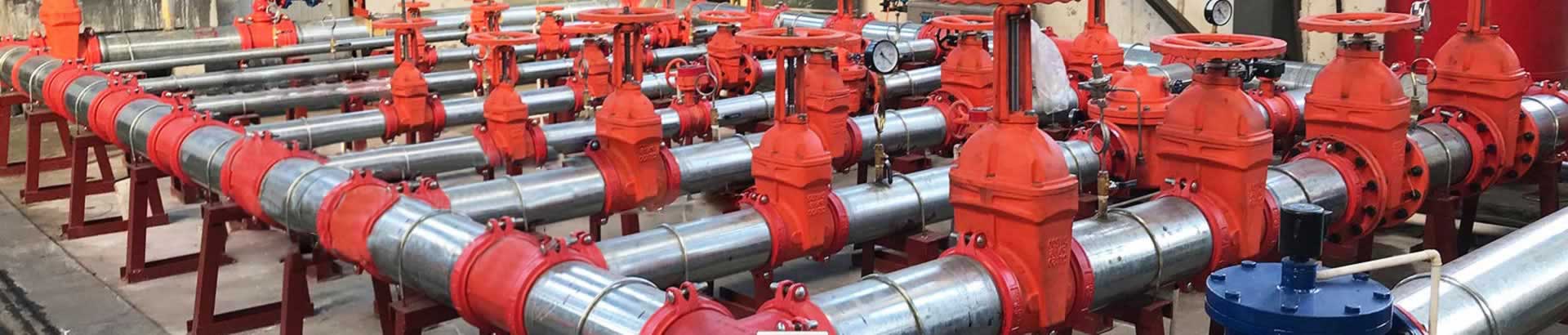

Securing Vessel Integrity Through Certified Marine Valve Selection
Operating commercial vessels, offshore platforms, and coastal infrastructure exposes piping networks to some of the harshest industrial conditions on earth. Continuous saltwater immersion, high-frequency engine room vibration, thermal cycling, and sudden pressure surges test every mechanical component aboard a ship. When an isolation or non-return valve fails inside a ballast tank, bilge line, or main seawater cooling loop, the consequences extend far beyond routine maintenance costs. Unplanned dry-docking, cargo contamination, environmental fines, and compromised vessel stability turn minor component defects into major financial liabilities. For shipbuilders, marine superintendents, and procurement engineers, identifying a trustworthy marine valve supplier requires looking past surface-level price quotes and examining verifiable technical credentials. Certified manufacturing processes, traceable metallurgy, and strict pressure testing separate reliable maritime hardware from substandard industrial substitutes. Leflow brings over two decades of specialized valve engineering and export experience to the maritime sector, supplying certified cast iron, cast steel, and bronze marine valves built to endure relentless offshore service.
Core International Certifications and Classification Society Approvals
Evaluating a marine valve supplier begins with verifying independent third-party accreditations. Unlike standard onshore municipal pipelines, shipboard systems fall under strict international maritime safety conventions that mandate documented proof of design and manufacturing integrity. Foundational credentials start with ISO 9001 quality management certification and Pressure Equipment Directive (PED/CE) compliance, which confirm standardized production workflows and safe pressure containment. However, true maritime readiness relies on type approvals and product certificates issued by recognized classification societies such as DNV, ABS, Bureau Veritas (BV), Lloyd’s Register (LR), and CCS. Earning classification approval involves rigorous witness testing, foundry audits, and design appraisals. Surveyors inspect casting facilities, review welding procedure specifications, and verify that valve bodies meet strict safety factors against mechanical shock and fire hazards. Working with a marine valve supplier that maintains active compliance with international standards such as JIS F7300 series, DIN, and API ensures seamless integration during newbuild construction and global dry-dock repairs without regulatory delays at port inspections.
Metallurgy and Material Selection for Seawater Corrosion Resistance
Material engineering dictates how long a valve survives in chloride-rich marine environments. Standard gray cast iron or unprotected carbon steel corrodes rapidly when exposed to aerated seawater, leading to seized stems, eroded seats, and structural wall thinning. Experienced marine engineers select alloys matched specifically to the fluid medium and surrounding hull materials to prevent galvanic corrosion. Nickel-aluminum bronze (NAB) and marine gunmetal remain premier choices for seawater cooling, firefighting, and desalination systems due to their natural resistance to biofouling, cavitation erosion, and stress corrosion cracking. For high-pressure steam, fuel oil, and cargo transfer lines, ASTM A216 WCB cast steel and austenitic CF8M (316) stainless steel deliver superior mechanical strength across wide temperature ranges. In lower-pressure utility and ballast applications, ductile iron bodies coated with high-build marine epoxy offer an economical balance of toughness and corrosion protection. Careful attention to trim pairings—such as matching bronze bodies with Monel or stainless steel stems—eliminates electrochemical reactions that otherwise cause premature galling and operational failure mid-voyage.
Technical Comparison of Common Marine Valve Configurations
Shipboard piping architecture incorporates dozens of distinct fluid circuits, each requiring specific flow characteristics, shutoff tightness, and space efficiency. Engine rooms demand compact footprints for maintenance access, while main ballast headers prioritize low pressure drop and rapid actuation. Comparing core valve designs helps procurement teams align technical specifications with operational demands.
| Marine Valve Type | Typical Body Materials | Pressure Rating Range | Primary Shipboard Applications |
| Marine Bronze Globe Valve | Nickel-Aluminum Bronze / Gunmetal | PN16 to PN25 / JIS 10K–16K | Seawater cooling pumps, bilge suction, and fuel oil throttling |
| Cast Steel Marine Gate Valve | ASTM A216 WCB / CF8M Stainless | PN16 to PN40 / Class 150–300 | Main ballast headers, cargo oil manifolds, and steam lines |
| Marine Lug Butterfly Valve | Ductile Iron (Epoxy Coated) / Bronze | PN10 to PN16 / JIS 5K–10K | Compact engine room cooling loops and freshwater distribution |
| Cast Iron Swing Check Valve | GG25 / GGG40 with Bronze Trim | PN10 to PN16 / JIS 5K–10K | Overboard discharge lines, sanitary systems, and pump protection |
Beyond basic geometry, seating technology determines long-term sealing reliability. Resilient-seated butterfly and gate valves utilizing EPDM or NBR elastomers achieve zero-leakage shutoff in low-pressure seawater and freshwater lines. Conversely, high-temperature boiler feedwater and fuel oil circuits require metal-to-metal hardfaced seats tested in accordance with API 598 or ISO 5208 leakage classes to prevent internal bypass under thermal expansion.
Shop-Floor Quality Control, Testing, and Traceability Protocols
Paper certificates hold little value unless backed by disciplined shop-floor inspection protocols. Casting defects such as subsurface porosity, sand inclusions, and shrinkage cavities frequently remain invisible after external machining, only to rupture during sea trials. A dependable marine valve supplier enforces multi-stage quality gates starting at the foundry. Spectrometric chemical analysis and Positive Material Identification (PMI) verify exact alloy percentages before pouring, ensuring compliance with ASTM, DIN, or JIS material grades. Critical pressure-retaining castings undergo ultrasonic testing (UT) and magnetic particle inspection (MT) to detect internal flaws early. Once CNC machining and assembly conclude, every single valve undergoes hydrostatic shell testing at 1.5 times its maximum allowable working pressure, followed by hydrostatic and pneumatic seat leakage tests at 1.1 times working pressure. Complete documentation packages—including EN 10204 3.1 Mill Test Reports (MTRs), pressure test charts, and dimensional inspection sheets—provide full heat-number traceability from raw ingot to final crating, giving shipyard inspectors complete confidence during receiving audits.
Custom Engineering and Supply Chain Reliability with Leflow
Maritime construction and vessel retrofits rarely follow one-size-fits-all templates, particularly when replacing legacy valves built to older Japanese JIS, European DIN, or American ANSI face-to-face dimensions. Leflow combines over twenty years of industrial valve manufacturing expertise with agile OEM and ODM engineering capabilities to solve complex retrofit and newbuild challenges. Equipped with advanced CNC machining centers, in-house chemical and mechanical testing laboratories, and strict quality assurance workflows, Leflow manufactures marine globe, gate, check, ball, and butterfly valves across cast iron, cast steel, and bronze specifications. Engineering teams collaborate directly with marine contractors to customize flange drillings, stem extensions, gearbox operators, and specialized marine epoxy coatings tailored to specific hull zones. Furthermore, export-grade moisture-barrier packaging, clear flange protection, and coordinated global logistics ensure every shipment arrives corrosion-free and ready for immediate dockside installation. By uniting certified quality control with responsive technical support, Leflow serves as a dependable long-term partner for global shipyards and marine operators.
Frequently Asked Questions
What classification society certificates are most common for marine valves?
Major international classification societies include DNV, ABS, Bureau Veritas (BV), Lloyd’s Register (LR), and CCS. Depending on the vessel flag state and piping class, suppliers provide factory type approvals or third-party witnessed product certificates verifying material integrity and pressure performance.
When should bronze valves be chosen over stainless steel for marine piping?
Nickel-aluminum bronze and gunmetal excel in continuous seawater cooling and firemain systems because they resist marine biofouling and chloride crevice corrosion effectively. Stainless steel CF8M is preferred for higher pressures, elevated temperatures, and aggressive chemical or cargo transfer lines.
How are marine valves pressure tested before export shipment?
Every certified marine valve undergoes hydrostatic shell testing at 1.5 times its nominal pressure rating to verify body strength, followed by hydrostatic and low-pressure air seat tests at 1.1 times nominal pressure under API 598 or ISO 5208 standards.