

Addressing Common Operational Failures in Municipal and Industrial Water Networks
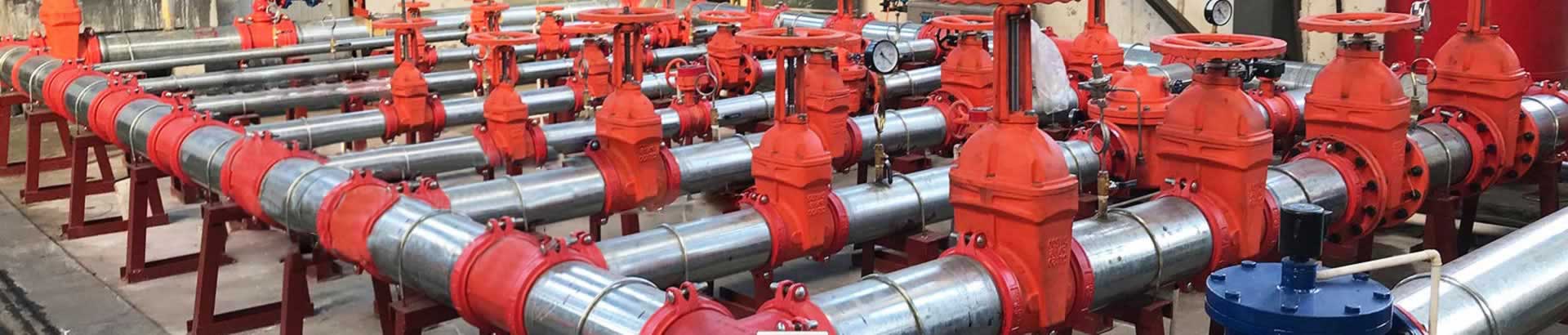
Municipal water distribution mains, wastewater treatment plants, heating ventilation and air conditioning loops, and industrial cooling towers rely heavily on iron valves to regulate high volume fluid flow at moderate pressures. Despite benign operating temperatures, fluid handling engineers frequently confront costly maintenance disruptions caused by internal tuberculation, stem seizure, premature elastomer tearing, and external flange cracking under water hammer surges. When sourcing components globally, partnering with an unverified cast iron valve supplier often exposes piping infrastructure to brittle castings poured from unrefined scrap iron with excessive phosphorus and sulfur impurities. Field inspections across water utility networks indicate that a significant portion of premature valve replacements stem from poor foundry sand casting control and inadequate internal corrosion protection rather than mechanical wear. Delamination of thin, improperly cured paint layers allows aggressive minerals and chlorinated water to attack bare iron surfaces, generating rust nodules that prevent complete wedge closure and induce chronic seat leakage. Selecting a dependable cast iron valve supplier requires evaluating core product features including metallurgical nodularization, precision stem sealing geometry, and fusion bonded epoxy coating adhesion to ensure decades of maintenance free service.
International Design Standards and Evolving Trends in Iron Valve Manufacturing
Global water infrastructure and industrial utility projects demand strict dimensional and pressure rating interchangeability across regional piping systems. A qualified cast iron valve supplier engineers flow control products to comply with diverse international frameworks, including DIN 3352 and EN 1171 for European networks, BS 5163 for British municipal systems, AWWA C509 and MSS SP 70 for North American utilities, and JIS B2031 for Asian industrial plants. While traditional grey cast iron conforming to ASTM A126 Class B or DIN GG25 remains widely utilized for vibration damping and cost efficiency in low pressure building services, modern engineering specifications increasingly transition toward ductile iron grades such as ASTM A536, GGG40, and GGG50. By introducing magnesium treatment during molten iron processing, ductile iron transforms lamellar graphite flakes into spheroidal nodules, delivering tensile strength and impact resistance comparable to carbon steel while retaining superior corrosion resistance. Furthermore, environmental and potable water safety regulations increasingly mandate WRAS or NSF approved non toxic epoxy coatings alongside triple O ring stem sealing systems that permit packing replacement under full line pressure. An experienced cast iron valve supplier integrates these international design standards into standardized production lines to meet complex project specifications seamlessly.
Technical Comparison of Core Cast Iron Valve Configurations and Metallurgy
Selecting the optimal valve architecture depends on flow velocity, suspended solids concentration, installation space, and throttling requirements across different pipeline zones. Resilient seated gate valves featuring fully vulcanized EPDM or NBR rubber wedges provide bubble tight bidirectional shutoff and clear, unobstructed flow paths that prevent debris accumulation in buried water mains. Conversely, metal seated cast iron gate valves and globe valves utilizing bronze or stainless steel trim rings excel in steam heating lines, marine bilge systems, and industrial plant utilities where elevated temperatures degrade soft elastomers. For compact pump room manifolds, wafer and lug centerline butterfly valves offer lightweight quarter turn modulation, while cast iron Y strainers capture pipeline scale to protect downstream meters and pumps. The comparison table below details the technical specifications, international standards, and material configurations of primary cast iron valves manufactured by Leflow.
| Valve Configuration | Primary Design Standards | Body Metallurgy Options | Seat and Trim Features |
|---|---|---|---|
| Resilient Seat Gate Valve | DIN 3352, BS 5163, AWWA C509 | Ductile Iron GGG40, GGG50, Grey Iron GG25 | Fully Vulcanized EPDM or NBR Wedge, Stainless Steel 2Cr13 or SS304 Stem |
| Metal Seat Gate and Globe Valve | MSS SP 70, MSS SP 85, DIN, JIS | Cast Iron ASTM A126 Class B, GG25, GGG40 | Bronze, Brass, or Stainless Steel Seat Rings, Rising or Nonrising Stem |
| Centerline Butterfly Valve | EN 593, API 609, MSS SP 67 | Cast Iron GG25, Ductile Iron GGG40 | Replaceable or Vulcanized EPDM, NBR, PTFE Liner, Electroplated or SS316 Disc |
| Swing and Ball Check Valve | DIN 3202, BS 5153, MSS SP 71 | Cast Iron GG25, Ductile Iron GGG40 | NBR Coated Sinking Ball or Bronze Faced Swing Disc, Bolted Cover |
| Cast Iron Y Strainer | DIN 3202 F1, MSS, ANSI Class 125 | Cast Iron GG25, Ductile Iron GGG40 | Perforated Stainless Steel SS304 or SS316 Screen, Drain Plug Blowoff Cover |
Evaluating internal component fabrication reveals the true engineering caliber of a cast iron valve supplier. Premium resilient wedges utilize high pressure rubber vulcanization technology that bonds elastomer molecules directly to the ductile iron core, preventing rubber peeling under high velocity flow conditions. Additionally, cold rolled stainless steel stems produce smoother thread surfaces than cut threads, minimizing operating torque and preventing damage to elastomeric stem seals during repeated cycling.
Foundry Quality Control and Coating Integrity Verification on the Shop Floor
Consistent valve longevity in corrosive underground soil or humid marine environments depends directly on disciplined foundry management and surface preparation protocols. When auditing a cast iron valve supplier, engineering teams must verify how raw castings undergo metallurgical and structural validation before assembly. Every foundry heat batch requires optical emission spectroscopy to confirm precise carbon, silicon, and manganese ratios, accompanied by metallographic microscopy on ductile iron pours to verify spheroidization rates and mechanical tensile strength. To eliminate surface pinholes and sand inclusions, raw valve bodies must undergo automated shot blasting to achieve near white metal cleanliness prior to coating application. A reliable cast iron valve supplier preheats blasted castings in controlled ovens before applying electrostatic fusion bonded epoxy powder both internally and externally. Quality control inspectors then utilize magnetic coating thickness gauges to verify uniform film buildup alongside high voltage holiday detectors to confirm zero microscopic pinholes across the entire wetted surface. Finally, every assembled valve undergoes shell hydrostatic testing and low pressure seat tightness validation in strict accordance with EN 12266 or API 598 criteria, ensuring zero weeping across flange gaskets, bonnet joints, and seating faces prior to export packaging.
Field Performance Insights and OEM Engineering Value from Leflow
Practical infrastructure upgrades demonstrate how precision engineered iron valves lower lifecycle operational expenses across municipal and industrial facilities. In a large scale industrial cooling water and papermaking circulation upgrade, utility operators previously experienced frequent pump impeller damage and valve stem jamming due to pipeline scale buildup and poor quality grey iron castings. By installing DIN standard resilient seated gate valves paired with cast iron Y strainers and wafer check valves featuring stainless steel internals and thick fusion bonded epoxy linings, the facility eliminated unscheduled maintenance shutdowns and reduced actuation torque significantly. Delivering reliable fluid control assemblies across diverse operating environments requires a cast iron valve supplier with comprehensive engineering and quality assurance capabilities. Headquartered in Shijiazhuang, Leflow brings more than twenty years of dedicated manufacturing and OEM supplier experience serving water treatment, construction, power generation, paper, chemical, marine, and petroleum sectors. Supported by a rigorous quality control system enforced from raw material intake through final dispatch, Leflow operates complete inhouse inspection and testing facilities capable of chemical element analysis, mechanical property testing, and nondestructive examination. Whether supplying DIN, BS, AWWA, MSS, or JIS compliant cast iron gate valves, butterfly valves, check valves, globe valves, marine valves, or custom engineered flow control models, partnering with a trusted cast iron valve supplier like Leflow ensures verified metallurgical integrity, durable corrosion protection, and responsive global delivery.
Frequently Asked Questions
What is the difference between grey cast iron and ductile iron valves?
Grey cast iron contains flake graphite, offering excellent vibration damping and machinability for low pressure water and steam lines. Ductile iron undergoes magnesium treatment to form spherical graphite nodules, providing superior tensile strength, impact resistance, and elongation that prevent body fracture under water hammer and ground movement.
How does fusion bonded epoxy coating protect cast iron valves?
Fusion bonded epoxy coating is electrostatically sprayed onto preheated, shot blasted iron castings, melting into a continuous thermoset polymer barrier. This smooth, impact resistant layer isolates the metal body from corrosive soil, aggressive wastewater, and mineral scaling, preventing internal rust tuberculation and ensuring safe potable water transport.
Which design standards apply to municipal cast iron gate valves?
Municipal cast iron and ductile iron gate valves are primarily manufactured according to DIN 3352 and EN 1171 for European pipelines, BS 5163 for British waterworks, AWWA C509 and MSS SP 70 for North American utilities, and JIS B2031 for Asian infrastructure, ensuring exact flange and face to face compatibility.